
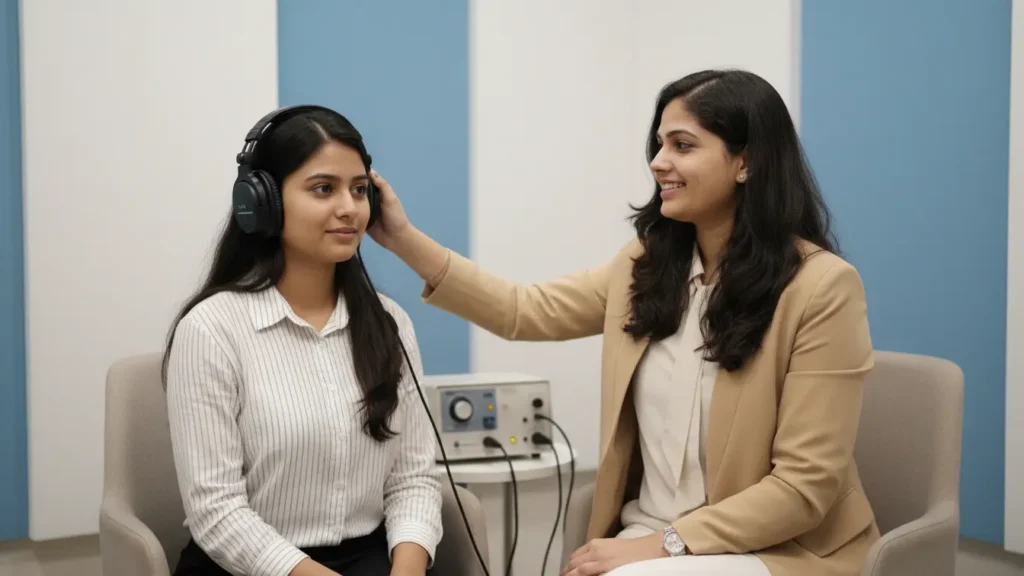
Walking into your first hearing test can feel intimidating. You might wonder if it will be uncomfortable, confusing, or if the results will be hard to understand. Many people delay hearing tests simply because they do not know what to expect. The truth is that a hearing test is one of the simplest and most stress free medical evaluations you can have.
Hearing plays a major role in daily life. It affects how we communicate, work, socialize, and stay safe. When hearing problems go undetected, they can slowly impact confidence, relationships, and even mental well being. A hearing test is not about judgment or bad news. It is about gaining information and clarity.
This guide is designed for first time patients who want a clear and simple explanation of what happens during a hearing test. From the moment you arrive at the clinic to understanding your results, everything will be explained in plain language. If you have been putting off a hearing test because of uncertainty, this article will help you feel prepared and confident.
Understanding Hearing and Why It Matters
Hearing is a complex process that allows sound waves to travel through the ear and be interpreted by the brain. It begins when sound enters the outer ear, moves through the ear canal, vibrates the eardrum, and passes through the middle ear bones. These vibrations reach the inner ear, where tiny hair cells convert sound into signals that the brain understands.
Healthy hearing is essential for communication. It allows you to follow conversations, enjoy music, respond to warnings, and stay connected to the world around you. When hearing begins to decline, the change is often gradual. Many people adapt without realizing it, turning up the volume or asking others to repeat themselves more often.
Untreated hearing loss can lead to frustration, isolation, and fatigue. It can affect job performance and personal relationships. For older adults, hearing loss has also been linked to cognitive decline. A hearing test helps identify changes early so that steps can be taken to protect and improve hearing health.
What Is a Hearing Test?
A hearing test is a non invasive evaluation that measures how well you hear different sounds, pitches, and speech. It is usually conducted by an audiologist or hearing care professional in a quiet clinical setting.
The test checks both ears individually and assesses how well sound travels through different parts of the ear system. It does not involve needles, pain, or medication. Most people describe it as easy and even interesting.
The purpose of a hearing test is to determine whether hearing loss is present, what type it may be, and how severe it is. The results help guide recommendations for treatment, which may include monitoring, medical referral, or hearing devices if needed.
Who Should Get a Hearing Test and Why
Many people assume hearing tests are only for older adults, but hearing evaluations are useful for people of all ages. Adults who struggle to hear conversations, frequently ask for repetition, or experience ringing in the ears should consider testing.
People exposed to loud noise at work or through hobbies are also at risk. This includes musicians, construction workers, factory employees, and frequent headphone users. Hearing tests can detect early changes before they become more serious.
Even if you feel your hearing is normal, a baseline hearing test can be helpful. It provides a reference point for future comparisons and promotes proactive health care.
Preparing for Your First Hearing Test
Preparing for a hearing test is simple. There is usually no special preparation required. You can eat, drink, and take medications as usual unless instructed otherwise.
It helps to think about your hearing concerns ahead of time. Consider situations where you struggle to hear, how long you have noticed changes, and whether you experience symptoms like ringing or dizziness. Writing these down can help you communicate clearly during the appointment.
Try to avoid loud noise exposure for at least twenty four hours before the test. This allows your ears to rest and ensures accurate results.
What to Expect When You Arrive at the Clinic
When you arrive at the clinic, you will be welcomed by staff who guide you through the process. You may be asked to complete basic paperwork that includes personal information and questions about your hearing health.
The environment is usually calm and quiet. Clinics are designed to make patients feel comfortable and at ease. If you feel nervous, remember that hearing tests are routine and performed every day for people just like you.
Medical and Hearing History Review
Before testing begins, the audiologist will ask questions about your medical history and hearing concerns. This may include questions about ear infections, noise exposure, medications, and family history of hearing loss.
You may also be asked about lifestyle factors such as work environment, hobbies, and communication challenges. These details help the audiologist understand potential causes and tailor the evaluation to your needs.
There are no right or wrong answers. Being honest and detailed helps ensure accurate results and appropriate recommendations.
Physical Ear Examination
The next step is usually a visual examination of the ears using a small handheld device called an otoscope. This allows the professional to look inside your ear canal and check the eardrum.
This exam helps identify issues like earwax buildup, inflammation, or blockage that could affect hearing. The process is quick and painless. You may feel slight pressure, but it should not be uncomfortable.
If any issues are found, they may be addressed before further testing continues.
Pure Tone Audiometry Explained
Pure tone audiometry is the most common part of a hearing test. You will be seated in a sound treated room or booth and wear headphones. The audiologist will play a series of tones at different pitches and volumes.
Each time you hear a sound, you will be asked to respond, usually by pressing a button or raising your hand. Some sounds will be very soft and may be difficult to hear. This is normal and part of the test.
The goal is to find the quietest sounds you can hear at each pitch. This information creates an audiogram, which is a visual chart of your hearing ability.
Speech Testing During a Hearing Exam
Speech testing evaluates how well you hear and understand spoken words. You may be asked to repeat words or sentences played through headphones at different volume levels.
This test reflects real life listening situations and helps assess how hearing loss may affect communication. It also provides insight into how well hearing devices might help if they are recommended.
Speech testing is straightforward and often feels more familiar than tone testing.
Middle Ear Tests and Tympanometry
Tympanometry is a test that checks how well the middle ear is functioning. A small probe is placed in the ear canal, and gentle air pressure changes are applied.
This test measures eardrum movement and can identify issues such as fluid behind the eardrum, eustachian tube problems, or middle ear stiffness. It is quick and may feel slightly strange, but it is not painful.
Middle ear testing provides important information that pure tone testing alone cannot reveal.
Additional Hearing Tests You May Experience
Depending on your symptoms, additional tests may be performed. These can include tests for inner ear function, balance, or nerve pathways.
Not everyone needs these tests. They are used when specific concerns arise or when further information is needed to clarify results.
The audiologist will explain each test before performing it so you know what to expect.
How Long a Hearing Test Takes
A complete hearing test usually takes between thirty and sixty minutes. The length depends on the number of tests performed and whether questions or concerns are discussed in detail.
There is no rush. The goal is to gather accurate information and ensure you understand the process and results.
Understanding Your Hearing Test Results
After testing is complete, the audiologist will explain your results in clear terms. You will see your audiogram and learn what it means for your daily life.
Results may show normal hearing, mild hearing loss, or more significant changes. If hearing loss is present, the audiologist will explain the type and degree.
This conversation is an important part of the appointment. Do not hesitate to ask questions or request clarification.
What Happens After the Hearing Test
Next steps depend on your results. Some people are advised to monitor their hearing over time. Others may be referred to a medical professional if a treatable condition is suspected.
If hearing devices are recommended, options will be discussed without pressure. You will have time to consider choices and ask questions.
The focus is always on supporting your hearing health and quality of life.
Common Myths and Fears About Hearing Tests
Many people fear that a hearing test will be uncomfortable or that bad news is guaranteed. In reality, hearing tests are gentle and informative.
Another common myth is that hearing loss means immediate hearing aids. Testing simply provides information. Decisions come later and are always collaborative.
Tips for Staying Comfortable and Relaxed
Arrive a few minutes early to settle in. Ask questions if you feel unsure. Remember that the audiologist is there to help, not judge.
Take breaks if needed and focus on responding honestly during tests. There is no need to strain or guess.
A hearing test is a simple and valuable step toward understanding your hearing health. Knowing what to expect can ease anxiety and help you approach the experience with confidence.
Whether your results show normal hearing or changes that need attention, the information gained empowers you to make informed decisions. Hearing well supports connection, safety, and quality of life. Taking that first step is easier than you might think.